Nymphéa
Artist: Ange Leccia
Part of the Estuaire Nantes collection
Saint-Nazaire, Le Voyage à Nantes
Since the 1980s, Ange Leccia has been working with videos and photographs, which he transforms – tearing, cutting, slowing down – to create arrangements exhibited around the world.
Nymphéa was created for Estuaire 2007, a contemporary art trail bringing together some thirty works in the Loire estuary, from Nantes to Saint-Nazaire. It is now a permanent feature of Le Voyage à Nantes, a collection of artworks in public spaces that reveal the city’s heritage.
Nymphéa is a video projected onto the surface of the Erdre River, at the exit of the Saint-Félix tunnel in Nantes, where the river becomes visible again before joining the Loire. The work is revealed at dusk in an almost intimate setting. The projection on the moving surface of the water refers to Claude Monet’s eponymous works and his pictorial research. The film reveals the face of a nymph, played by model and actress Laetitia Casta. In Greek and Roman mythology, nymphs haunt the waters, woods, and mountains, personifying a living and creative nature. The nymph depicted by Ange Leccia moves under the water: the slow-motion image shows a serene face with hair floating gently, while bubbles sometimes escape from her mouth, as if the nymph were addressing the visitor. The work appeals to the viewer’s imagination, with the aquatic element intensifying the effect.
Water is both present in the image and the medium of the image. The calm, moving surface of the river reinforces the sense of tranquility already suggested by the nymph’s serene face. It also accentuates the poetic and unreal dimension, as well as the intimacy that is developed with this character who looks out at the visitor. The river, like a mirror, and the nymph’s immersion invite introspection.
Ange Leccia considers water as a “layer of the imagination” (1). The aquatic filter and the depth of the river open up a space inviting us to dream. The work navigates between two worlds: between woman and divinity, between reality and imagination. The slowed-down image, which does not reproduce reality as it is, allows the spectator to fully dive into it. The artist thus affirms the use of slow motion and the “modification of usual time” as an artistic and poetic language. – F. Kervarec
(1) https://www.radiofrance.fr/franceculture/podcasts/carnet-nomade/croisiere-sur-l-estuaire-2681331 [37:49]
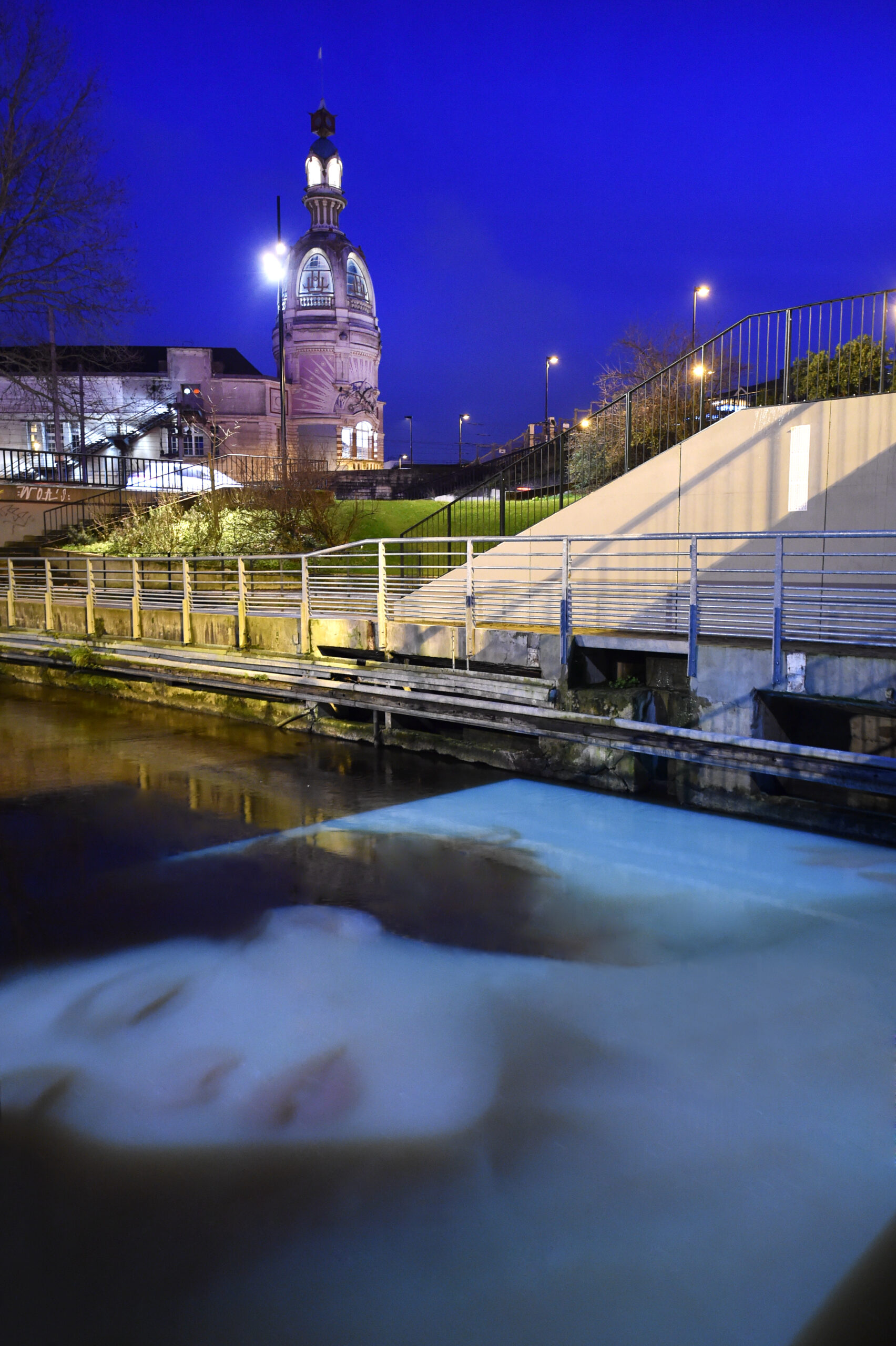
Image © Jean-Dominique Billaud, Nautilus_LVAN
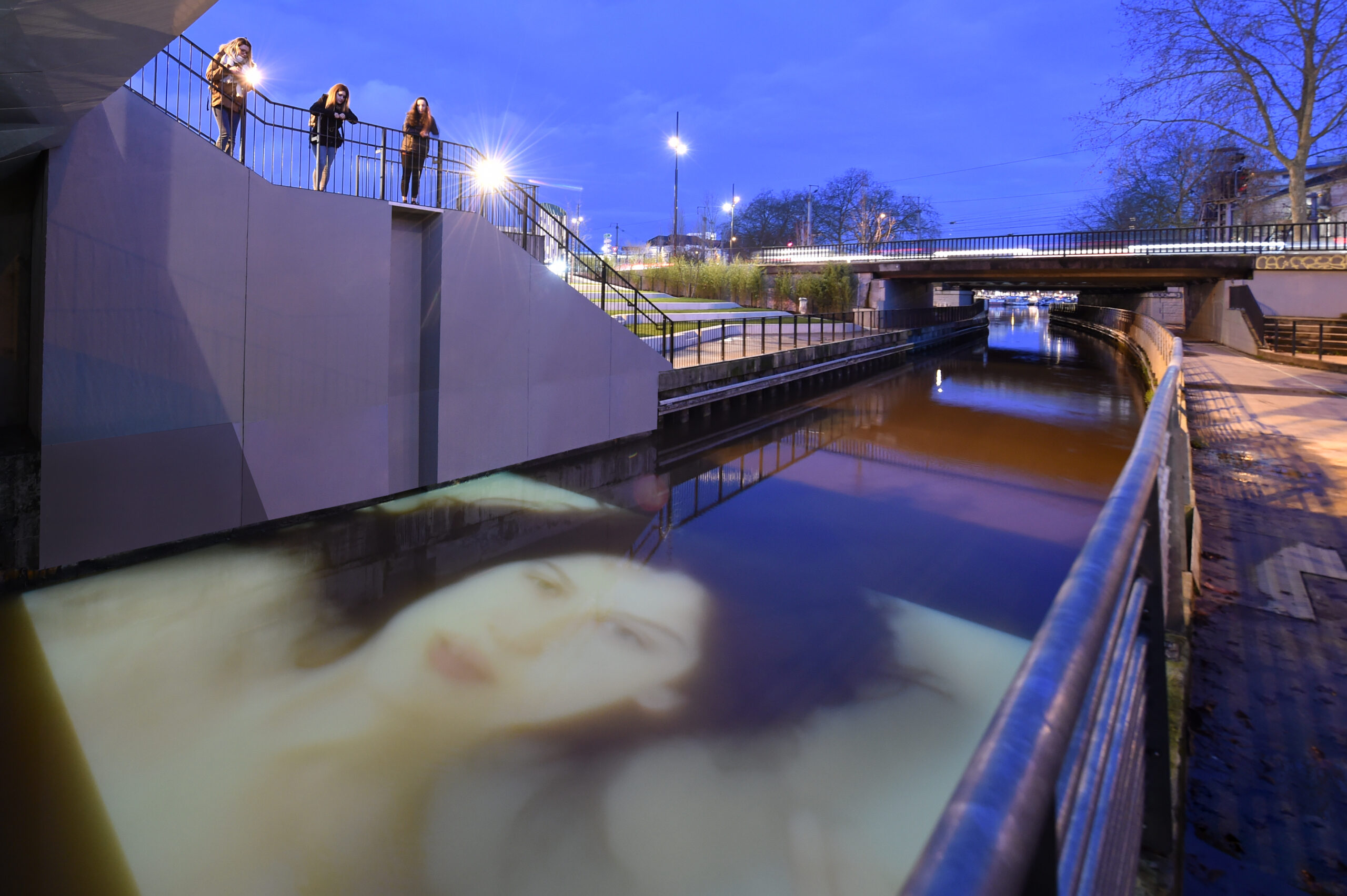
Image © Jean-Dominique-Billaud-Nautilus_LVAN
Image © Jean-Dominique Billaud, Nautilus_LVAN
Image © Jean-Dominique-Billaud-Nautilus_LVAN