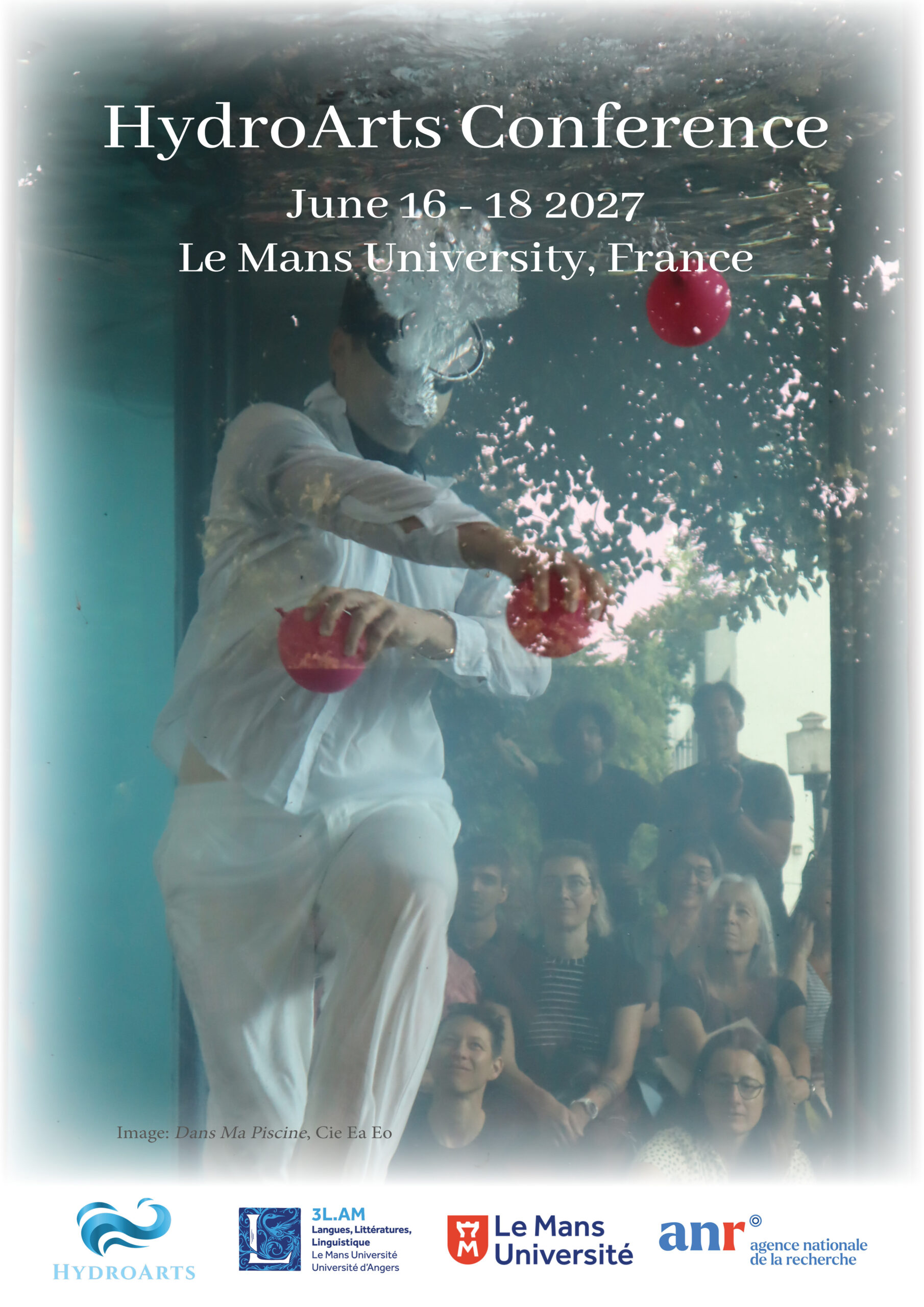
HydroArts Conference 2027

General information

HydroArts will host a 3-day conference from June 16-18, 2027 in Le Mans, France. We’re excited to bring together inspiring established and early-career scholars and our international team to spend 3 days exploring water in artistic creation and the concepts it evokes. As the planning unfolds, you will be able to find information on this page regarding the agenda, keynote speakers, panels, and presentations.

Visiting Le Mans

Le Mans is a mid-sized town on the Sarthe river in northwest France. Most famous for the 24-hour race (which takes place in June but will not coincide with the conference), Le Mans also boasts a witchy old town, impressive cathedral and remarkably well-preserved Gallo-Roman wall dating back to the 4th century C.E.

Located at just over 1 hour from Paris by train, there is a direct (though infrequent) train service from Charles de Gaulle Airport, and a bus from Orly Airport. Once in Le Mans, you will be able to get around easily by tram.

Call for papers

Since the turn of the century, the live presence of water in artistic practice has reached remarkable proportions, inviting sustained scholarly attention. Across genres and mediums, works on, in, and with water and ice address a range of social issues from migration and ecology to government oppression, social injustice, and globalization. From performers plunged into aquariums and productions staged on glaciers to platforms floating on rivers and underwater sculptures slowly colonized by sea life, spectacular and performative instances of hydroarts inspire documentation and analysis. Providing fertile case-studies for a comparative, cross-cultural approach, participatory practices in public pools and waterways also encourage socially inclusive community building and activism around water conservation (click on the corpus tab above for many examples of aquatic art and performance).

Funded by the French national agency for research (ANR), the HydroArts project documents works across Francophone and Anglophone regions in which water plays a live role while researching the various influences and perceptions of this evolution (e.g. climate change, cultural imaginaries, technological advances, economic developments, evolving gender norms, etc.) in the attempt to trace the contours of the aquatic turn in performance and the arts. Crossing the data with post-humanist theories inundated with aquatic terminologies (oceanic epistemologies, hydrofeminism, liquid modernities, the black aquatic, etc.), the project explores how the loss of climate stability and new materialist philosophies can be said to engage with the proliferation of live water in artistic and performative practices.

The conference is designed to bring together leading scholars in the field of Environmental Humanities along with curators, art historians, theater and performance scholars to further the project’s efforts in developing a Blue Humanities branch devoted to art and performance. Perspectives from hydrology, geography, oceanography, critical theory, tourism, sound design, new materialism, post-humanist philosophy, and environmental law are all welcome.

Our investigations center on the potential aspects of co-creation or artistic partnership with water, ice, or fog, whether their inclusions or interventions occur as obstacles, mediums, props, or protagonists. We invite presentations on hydroartistic creations, such as:

  • Flooded or wet stages
  • Aquarium performances
  • Productions in public pools or waterways
  • Ice creations in art and performance
  • Merfolk communities
  • Watery stagings of immigration and refugee journeys
  • Aquatic remembrances of the Middle Passage
  • Water in performative protests
  • Submerged art installations
  • Underwater dance
  • Immersive digital creations devoted to water
  • Performative river practices

Presentations devoted to artistic practices from the Global South are particularly encouraged.

Limited bursaries for emerging scholars are available.

Deadline for Submissions: October 5, 2026

Submission Guidelines
We are soliciting proposals for 20-minute papers or performative lectures, in either English or French. Abstracts of 300 words along with short bios may be submitted via the online portal:

Keynote speakers
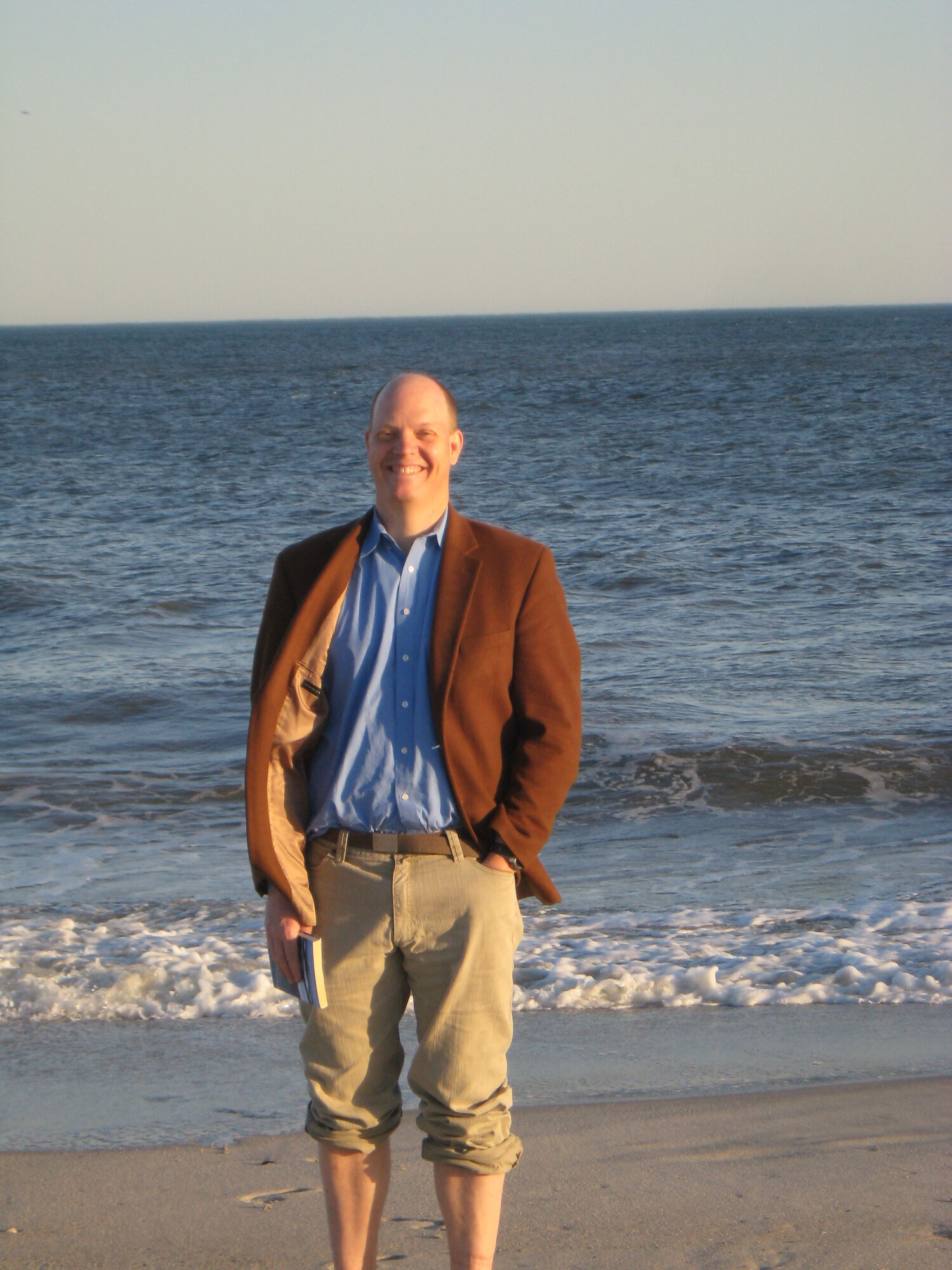
Steve Mentz

Photo: Christianne Cain

Steve Mentz is Professor of English at St. John’s University in New York City. His work explores the Blue Humanities, Early Modern Literature, Ecocriticism, Shakespeare, and the Literary Theory.

He is responsible for coining the phrase and developing the field of “Blue Humanities,” an approach which challenges the terrestrial bias of environmental studies and highlights engagements with water as a material, imaginary, and social force.

Steve is the author of creative works Two Crossings (2025), Sailing without Ahab (Fordham 2024), and Swim Poems (2022), and of critical publications An Introduction to the Blue Humanities (Routlege, 2023), Ocean (Bloomsbury / Object Lessons, 2020), Break up the Anthropocene, (U Minn P, 2019), and Shipwreck Modernity: Ecologies of Globalization 1550 – 1719 (U Minn P, 2015).

He is also the editor or co-editor of seven book collections, including A Cultural History of the Sea in the Early Modern Era (Bloomsbury 2021), The Routledge Companion to Marine and Maritime Worlds 1450-1800 (2020), and The Sea and Nineteenth-Century Anglophone Literary Culture (Routledge, 2016). He is a Series Editor for Environmental Humanities in Premodern Culture (EHPC) for Routledge Publishing.

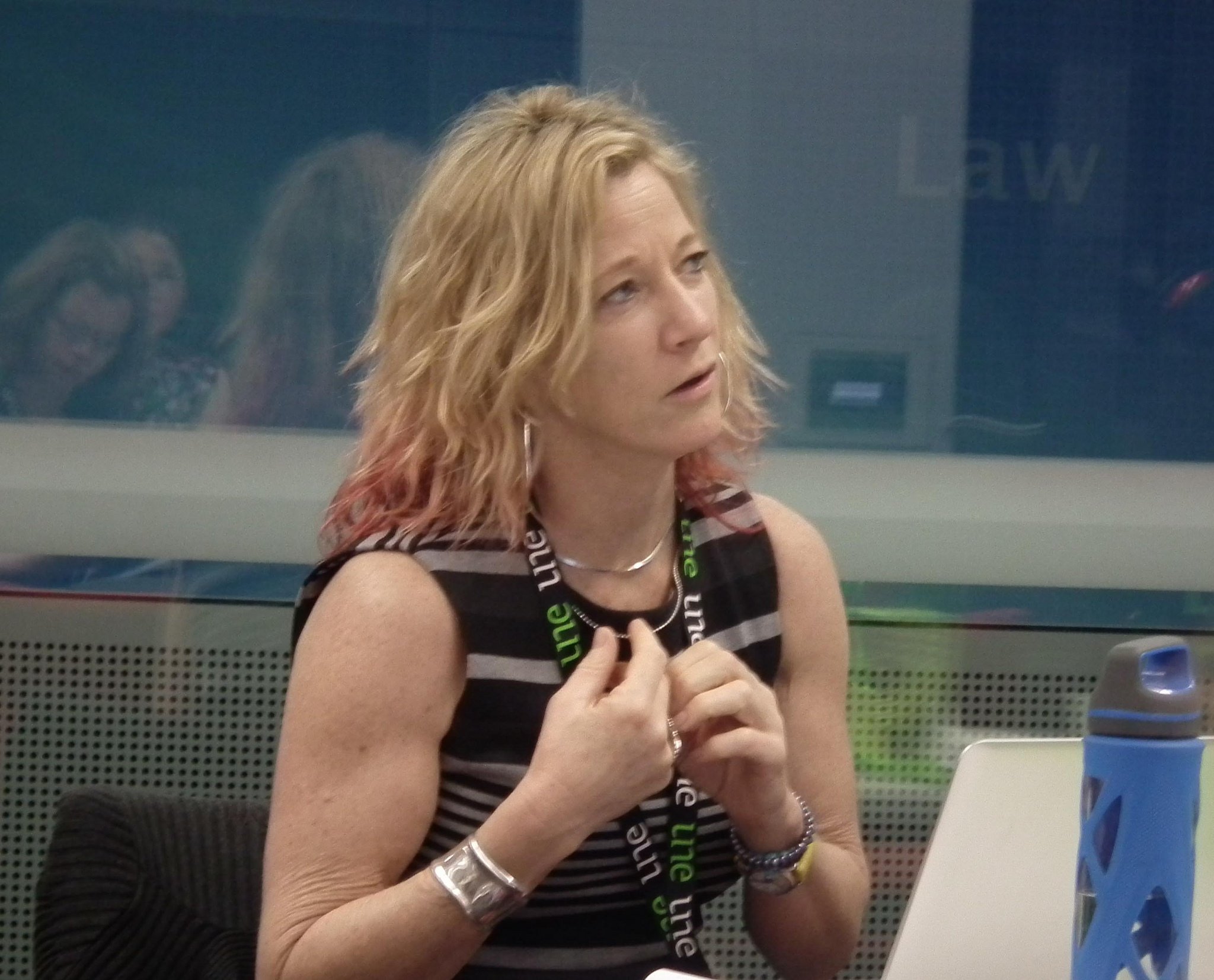
Elizabeth DeLoughrey

Elizabeth DeLoughrey is a professor at UCLA in the English Department and the Institute of the Environment and Sustainability. She works in Caribbean and Indigenous Pacific Island studies with a focus on literature, arts, and ecology. Her research contributes to the fields of feminist and postcolonial ecocriticism, critical ocean studies, island studies, demilitarization, and the environmental humanities.

Elizabeth teaches a range of postcolonial and Indigenous literature courses about imagining and representing climate change and the Anthropocene, the cultural politics of food, representations of empire and the environment, as well as courses on the oceanic imaginary in literature, film, and art.

She is the author of Allegories of the Anthropocene (Duke UP, 2019) and Routes and Roots: Navigating Caribbean and Pacific Literatures (University of Hawai’i Press, 2007), and co-editer of Global Ecologies and the Environmental Humanities: Postcolonial Approaches (Routledge, 2015), Postcolonial Ecologies: Literatures of the Environment, (Oxford UP, 2011), and Caribbean Literature and the Environment: Between Nature and Culture (University of Virginia Press, 2005), in addition to numerous journal issues on critical ocean, island and militarism studies.